Candidate work sample · Expert readiness
Drafted by AI. Sent by You.
An independent candidate work sample exploring how support Experts can help people use AI with confidence. I shaped the learning approach, directed the visual storytelling, and built an interactive prototype. Not a commissioned or deployed Intuit program.
- Context
- Intuit Academy craft assessment
- Role
- Instructional designer & creative producer
- Status
- Candidate work sample · prototype
- Date
- October 2026
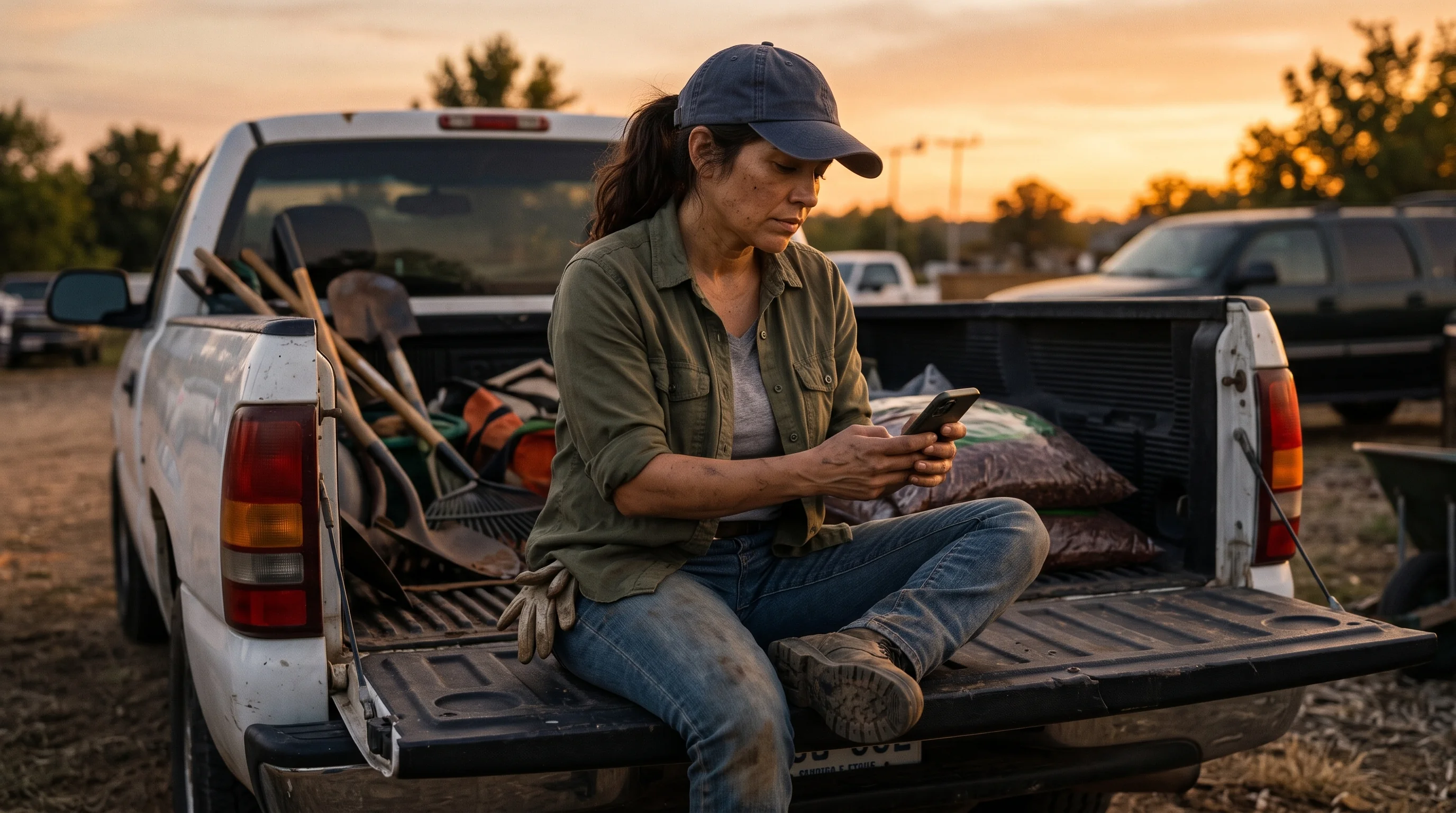
Interactive experience
Take Marisol’s call.
Play the cold open and explore the available prototype interactions. This candidate work sample demonstrates selected parts of the proposed learning experience.

Executive summary
A readiness strategy tied to the work.
I framed the business goal around resolving AI-invoicing questions and helping customers keep using the feature with confidence. That meant designing for Expert judgment and customer communication together.
I used the customer problem to determine what belonged in practice, what needed support during a call, and what would need reinforcement after launch. The working sample demonstrates selected parts of that strategy.
- Business need
Resolve the issue. Preserve confidence.
Support customers through an AI-assisted mistake without defaulting to abandoning the feature.
- Learning response
Practice judgment in context.
Connect product accuracy, customer communication, and support at the moment of need.
- Success to evaluate
Look beyond completion.
Examine demonstrated skill, workplace behavior, and the quality of customer resolution.
My role
Learning design, visual direction, and prototyping.
- Learning design
- I translated the customer problem into a focused learning direction and shaped the experience around decisions rather than a feature tour.
- Creative direction
- I directed the AI-generated cold open and reviewed the imagery for tone, continuity, and its connection to the learning purpose.
- Interactive build
- I brought the story and interface together in Figma Make to make the learning approach tangible.
How I plotted the experience.
I connected the customer problem to the learning intent, then used that foundation to shape the story, the visuals, and the interaction.
Start with the customer problem
What happened, who is affected, and why does this moment matter?
Define the learning intent
What judgment does the Expert need to bring to the conversation?
Plot the story
Connect the situation, dialogue, and decisions into a purposeful experience.
Two connected design tracks
Direct the visuals
Shape the scenes, tone, and continuity so the imagery supports the learning.
Design the interaction
Connect the learner’s choices with consequences and useful feedback.
Bring it together in the prototype
Combine the narrative, media, and interface in a working sample.
Review and refine
Check the language, visual continuity, and alignment with the learning intent.
The review feeds back into the story, visuals, and interaction. This map shows my design approach; product accuracy remains subject to SME validation.
Strategic design decisions
The strategic choices behind the design.
Protect operational capacity.
Experts learn between customer contacts, with limited time away from their queues.
I chose short, modular learning and support available during the work, so every format had a distinct purpose.
Build capability beyond launch.
A feature demonstration alone cannot establish consistent behavior on a customer call.
I connected demonstration, realistic practice, performance support, and reinforcement. I treated product correctness and customer trust as separate dimensions of readiness.
Design for the next feature.
A custom course for every release would repeat design and production effort.
I separated reusable learning structures from feature-specific content. The intent was to make future updates easier without compromising the customer context.
How I would coordinate delivery.
The storyboard proposes responsibilities and review points across product, readiness, and quality for a production rollout. SME sign-off, QA, and pilot review remain pending.
Product SME
Validate product behavior, terminology, and escalation boundaries.
Accuracy reviewPlannedReadiness lead
Confirm audience needs, learning priorities, and delivery fit.
Design alignmentPlannedQA and pilot Experts
Check usability, accessibility, technical delivery, and clarity in realistic use.
Pilot and quality reviewPlannedFacilitators and team leads
Support the shared launch experience, coaching, and observation during the work.
Launch and transferPlannedAI-assisted production
AI-assisted production, human-owned decisions.
Claude
Supported script and dialogue drafts. I owned the framing, voice, and final editorial decisions.
Google Gemini Omni
Supported visual production under my creative direction and review.
Figma Make
Helped turn the design into a clickable sample. Interface concepts are for training and do not represent verified internal Intuit applications.
How I would know the strategy is working.
Proposed evaluation pathway. Measures would be established before launch and interpreted against a baseline; no learner or business results are claimed for this work sample.
Demonstrated skill
Practice and assessment evidence by learning objective.
Decision it informsUse gaps to refine practice and feedback.
Workplace behavior
QA observation of product explanations, customer coaching, and appropriate escalation.
Decision it informsUse patterns to target coaching and performance support.
Business signals
Repeat contacts, handling time, customer satisfaction, and avoidable transfers.
Decision it informsReview these together to prioritize improvements; faster handling alone would not establish success.
What I built. What I would validate next.
A working demonstration
- Produced the cinematic cold open and a working interaction prototype.
- Connected the customer situation, visual direction, interface, and feedback in a selected demonstration.
The next release decisions
- Confirm product accuracy and open questions with the SME.
- Complete accessibility and technical QA, then pilot with representative Experts.
- Use pilot findings to revise the experience before launch and establish the evaluation baseline.
Independent candidate work sample with fictional customer data and AI-generated imagery. No rollout, learner-performance, adoption, or business outcomes are claimed.
Reflection
The next investment should follow the evidence.
The prototype makes the design approach tangible. It does not yet establish workplace transfer or business impact. My next priority would be to validate the product assumptions and observe how representative Experts use the experience.
Those findings would guide what to refine in practice, what belongs in performance support, and whether the reusable structure is ready for another feature. AI accelerated drafting and production; I retained ownership of the learning decisions and editorial review.